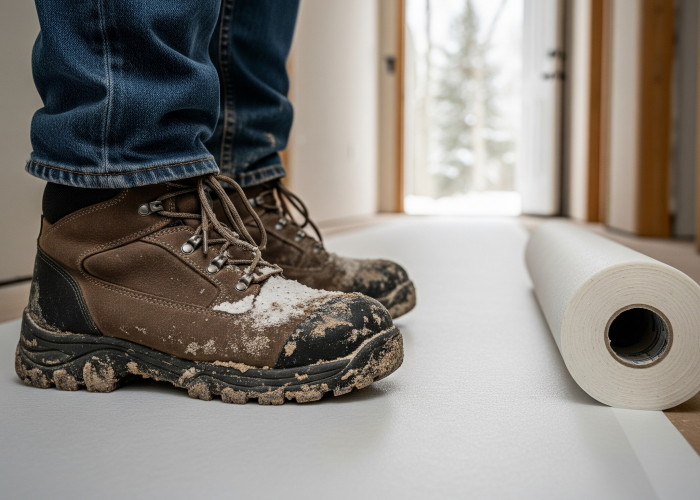
The “Salt Season” Threat
Construction doesn’t stop just because the temperature drops. But winter brings a specific set of enemies to your interior finishes: Rock Salt (Calcium Chloride), Melting Snow, and Frozen Mud.
If you are protecting your client’s entryways and hallways with standard rosin paper or cardboard during the winter months, you are fighting a losing battle.
1. The Chemical Attack: Salt vs. Hardwood
Rock salt is great for driveways, but it is kryptonite for wood floors.
- The Science: When salt melts snow on boots, that salty slush tracks inside. If it soaks through permeable paper protection, the salt crystals recrystallize on the surface of the wood finish.
- The Damage: Salt is abrasive (scratches) and chemically aggressive (can cloud or strip certain polyurethanes). It creates white stains that are often impossible to remove without sanding.
The Polysols Solution: Our Premium Surface Protection features a 100% impermeable top film. It creates a waterproof barrier that stops salty slush dead in its tracks. At the end of the day, you can mop the protection clean, removing the salt before it ever touches the floor.
2. The Safety Hazard: Slip-and-Fall
Wet boots on loose protection is the recipe for a Workers’ Comp claim.
- The Danger: As crews walk in from the snow, standard plastic drop cloths become ice rinks. Rosin paper gets wet, tears, and bunches up, creating trip hazards.
The Polysols Solution: Safety is built into our backing. Our products feature a specialized anti-slip coating on the top (for grip under wet boots) and a pressure-sensitive adhesive on the bottom (to lock the mat to the floor). Even when wet, the protection stays flat and provides traction for your crew.
3. The “Mud Season” Transition
As winter turns to spring, frozen ground turns to mud.
- The Problem: Mud is heavy and abrasive. Cardboard (Builder’s Board) can absorb water from mud, turning soggy and useless.
- The Fix: Polysols is reusable. Because it doesn’t absorb water, you can hose it off outside or wipe it down. It survives the transition from snow to mud without needing replacement.
Winter Protection Checklist
Don’t wait for the first blizzard to upgrade your site prep.
- Entryways: Create a “landing zone” with Premium Protection for the first 20 feet of the entrance.
- Stairs: Wrap treads tight with self-adhesive protection to prevent slipping on elevation changes.
- High Traffic: Use waterproof tape on seams to ensure no melted snow leaks through gaps.
Keep your floors dry, your crew safe, and your schedule moving this winter.
Shop Waterproof Winter Protection