
A,Tape,That,Combines,A,Masking,Tape,And,A,Vinyl

Stop Taping: How Self-Adhering Protection Cuts Labor Costs by 30%

The “Blue Tape” Budget Killer

Walk onto any residential jobsite during the protection phase, and you’ll see the same thing: two guys on their hands and knees, fighting with a roll of rosin paper that keeps curling back up, while a third guy chases them with a roll of blue painter’s tape, sealing every single seam.

It’s the industry standard way to do things. It’s also incredibly inefficient.

While the paper itself is cheap, the “system” of paper-plus-tape is a silent budget killer. Here is why the old way of doing things is costing you more than you think.

1. The Cost of the Tape Itself

Have you looked at the price of a case of premium 2-inch painter’s tape lately? To properly secure non-adhesive paper or cardboard, you need to tape the entire perimeter (to stop dust) and every seam (to stop tripping). On a 2,000 sq. ft. custom home, you can easily burn through $100+ in tape alone. That is a hidden “consumable” cost that often gets overlooked in the bid.

2. The Liability of Residue

We have all been there. The job went great, the client is happy… until you pull up the floor protection.

  • The Problem: You left the blue tape down for 45 days. Now, the adhesive has cured to the hardwood finish.
  • The Nightmare: When you pull the tape, it either leaves a sticky residue that requires chemical solvents to remove (risking the finish), or worse, it pulls the finish right off the floor.

3. The Efficiency Math: Rolling vs. Taping

The biggest savings isn’t materials—it’s labor.

The Old Way (Paper + Tape):

  1. Roll out paper (it curls).
  2. Weight down corners.
  3. Tape perimeter.
  4. Tape seams.
  5. Repeat.
  • Estimated time for 500 sq ft: 45 Minutes (2 people)

The Polysols Way (Self-Adhesive):

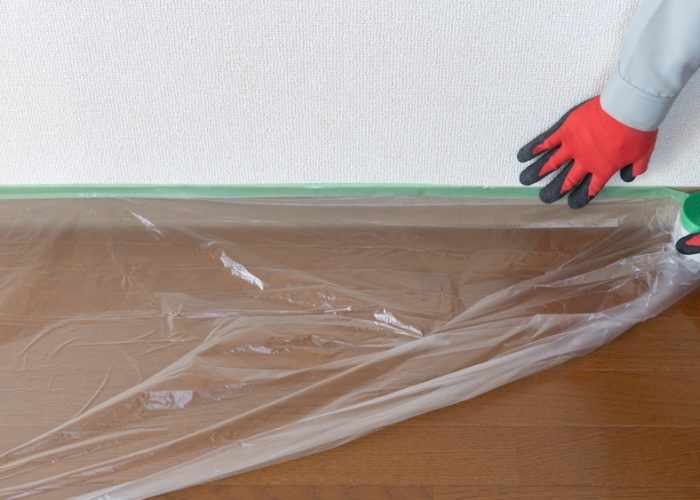
  1. Kick the roll out.
  2. Smooth it down with your foot.
  3. Done.
  • Estimated time for 500 sq ft: 10 Minutes (1 person)

Enter Polysols Premium

Our Premium Surface Protection line features a specially formulated, pressure-sensitive adhesive on the underside.

  • Stays Put: It grips the floor immediately. No sliding under ladders, no bunching up under foot traffic.
  • Safe Removal: The adhesive is water-based and designed to release cleanly, even after weeks on the job. No residue, no ghosting.
  • Safer Jobsite: Because the entire mat adheres to the floor, you eliminate the trip hazards caused by torn paper or loose taped seams.

The Bottom Line

If you are still buying rosin paper to “save money,” you are stepping over dollars to pick up pennies. By eliminating the tape and slashing installation time, Polysols Premium pays for itself before the first day of work is even finished.

Shop Self-Adhesive Surface Protection

Winter Proofing Your Jobsite: Protecting Floors from Salt, Mud, and Snow

A single winter storm can track enough rock salt and melting snow onto your jobsite to ruin a newly finished hardwood floor in an afternoon. But the danger isn't just to the wood—it's to your crew. Here is why switching to waterproof, anti-slip protection is the cheapest insurance policy you can buy this winter.

Distributor vs. Manufacturer Direct: Where is Your Margin Going?

You fight for every percentage point of margin on your bids. So why are you handing 30% of it right back to the local distributor for consumables like floor protection? In this guide, we break down the supply chain math and show how buying direct from Polysols doesn't just save you money—it guarantees you have the product when you need it.

Moisture Management: Choosing the Right Seam Tape for Pet Runs vs. Patios

You picked the perfect turf, but did you pick the right tape? Using a solid-barrier tape on a pet run can trap odors and urine, while using permeable tape on a wooden deck can rot the subfloor. Here is your quick guide to choosing the right seam tape for the specific demands of your project.

Seam Tape vs. Glue-Down: Which Method Prevents “Seam Popping”?

The phone rings six months after a turf install. It’s the client. 'There’s a gap in the grass.' Seam popping is the number one cause of callbacks in the synthetic turf industry. It eats your profit and kills your reputation. Here is why the 'old school' glue methods are failing and why carrier tapes are the industry standard for longevity.