Renovating an active healthcare facility is the Formula 1 of construction. You aren’t just dealing with deadlines and budgets; you are dealing with patient safety.
Infection Control Risk Assessment (ICRA) protocols dictate exactly how contractors must handle dust, debris, and airflow. One of the biggest violation points during these inspections? The floors.
If you are using loose rosin paper that traps dust or drop cloths that slide around, you are already non-compliant. Here is why specialized surface protection is mandatory for healthcare projects.
In hospital settings, dust carries spores (like Aspergillus) that can be fatal to immunocompromised patients. ICRA standards require that dust be contained at the source.
The Failure Point: Canvas drop cloths are porous. When you walk on them, they act like a bellows, pumping settled dust back into the air. Taped paper creates tunnels where dust accumulates and then blows out when a door opens.
The Polysols Solution: Our Premium Surface Protection creates a sealed, impermeable barrier over the flooring. Because it is self-adhesive, there are no gaps for dust to hide under. It effectively turns the floor into a “clean room” surface that traps dust on top, where it can be easily vacuumed with a HEPA filter, rather than letting it circulate.
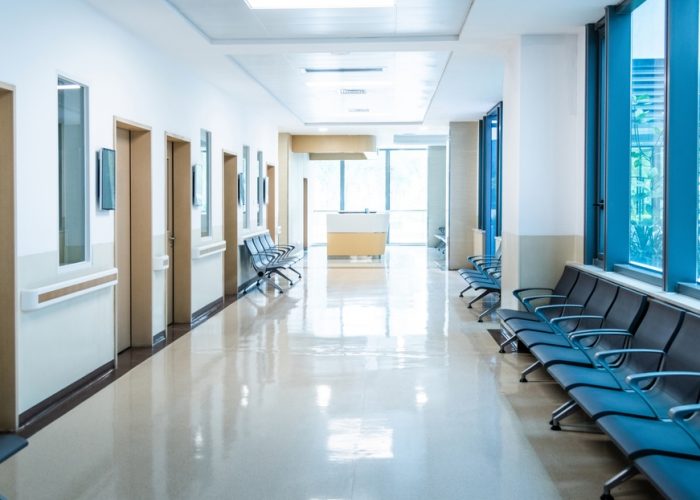
Hospitals are high-traffic zones with doctors, nurses, and gurneys moving quickly near construction barriers.
The Failure Point: A loose sheet of plastic in a hospital corridor is a lawsuit waiting to happen. If a surgeon trips over a curled edge of protection, the liability falls squarely on the General Contractor.
The Polysols Solution: Safety is built into the backing. Polysols products feature a high-tack adhesive backing that locks the protection to the subfloor. It creates a completely flat, non-slip surface that accommodates rolling traffic (wheelchairs, IV poles, carts) without bunching up or creating trip hazards.
Unlike a residential job where you clean up at the end, hospital jobsites must be kept sanitary during the work.
The Failure Point: You cannot mop rosin paper. You cannot sanitize a canvas tarp.
The Polysols Solution: Our surface protection features a waterproof top film that is resistant to common hospital cleaners. If a spill occurs, or if infection control requests a wipe-down of the construction zone entry, our mats can be cleaned with standard disinfectants without degrading.
Winning healthcare bids often comes down to proving you understand the environment. specifying Polysols Premium in your bid package demonstrates to the Facility Manager that you take ICRA standards seriously.
Don’t let a failed inspection shut down your jobsite. Equip your crew with protection that meets the standard of care.