Gemini_Generated_Image_f9673sf9673sf967

Distributor vs. Manufacturer Direct: Where is Your Margin Going?

The “Convenience Fee” You Didn’t Know You Were Paying

It is 6:00 AM. You are on the way to the jobsite. You stop at the local big-box store or contractor supply house to grab ten rolls of floor protection and a case of tape. It is part of the routine.

But have you ever looked at the price tag on that “convenience”?

The construction supply chain is long. By the time a roll of surface protection reaches the shelf of your local distributor, it has changed hands three or four times.

  1. Manufacturer (That’s us)
  2. National Wholesaler (+15% markup)
  3. Regional Distributor (+20% markup)
  4. Local Retailer (+25% markup)
  5. You (Paying full retail)

1. Stop Paying for the Middleman’s Warehouse

When you buy from a third-party distributor, you aren’t just paying for the plastic or the paper. You are paying for their warehouse lighting, their sales team’s commission, and their delivery trucks.

The Polysols Difference: We manufacture our products. When you buy from Polysols.com, you are buying from the source. There is no middleman adding a percentage on top just for moving a box from one truck to another.

  • Result: You get premium, commercial-grade materials for the same price (or less) than the generic “builder grade” junk on the shelf.

2. Supply Chain Security: The Empty Shelf Problem

We all remember the supply chain chaos of recent years. Relying on a local distributor means you are at the mercy of their inventory manager. If they forget to reorder 36″ rolls, your jobsite shuts down or you scramble to find an inferior substitute.

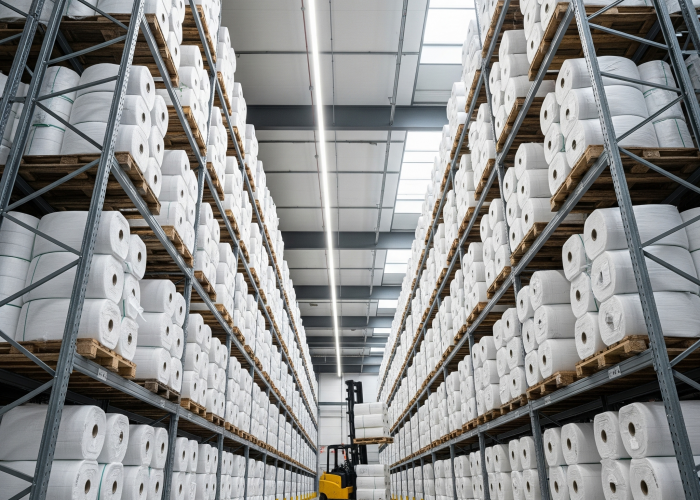
The Polysols Difference: We control the inventory. Our warehouse in Spartanburg, SC, is stocked deep with pallets of Premium Protection and Seam Tape.

  • Result: Consistent availability. When you land a big hospital job, you don’t have to cross your fingers and hope the supply house has 50 rolls in stock. We do.

3. Bulk Pricing for Real Contractors

Retail stores are designed for the guy buying one roll. They punish volume buyers with high unit prices.

The Polysols Difference: Our pricing model is built for contractors who buy by the pallet.

  • The “Contractor Roll”: We sell larger rolls (like our 330′ Turf Tape) that aren’t available in retail stores.
  • Volume Discounts: Buying a pallet of Vapor Protection drops your cost per square foot significantly.
  • Free Shipping: On qualified bulk orders, the freight is on us.

The Bottom Line

Your profit margin is determined by two things: how much you charge, and how much you spend. You can’t always raise your prices, but you can definitely lower your costs.

Stop treating consumables like an afterthought. Make a strategic shift to buy direct, and put that 30% distributor markup back in your pocket where it belongs.

Shop Direct & Save

Winter Proofing Your Jobsite: Protecting Floors from Salt, Mud, and Snow

A single winter storm can track enough rock salt and melting snow onto your jobsite to ruin a newly finished hardwood floor in an afternoon. But the danger isn't just to the wood—it's to your crew. Here is why switching to waterproof, anti-slip protection is the cheapest insurance policy you can buy this winter.

Moisture Management: Choosing the Right Seam Tape for Pet Runs vs. Patios

You picked the perfect turf, but did you pick the right tape? Using a solid-barrier tape on a pet run can trap odors and urine, while using permeable tape on a wooden deck can rot the subfloor. Here is your quick guide to choosing the right seam tape for the specific demands of your project.

Seam Tape vs. Glue-Down: Which Method Prevents “Seam Popping”?

The phone rings six months after a turf install. It’s the client. 'There’s a gap in the grass.' Seam popping is the number one cause of callbacks in the synthetic turf industry. It eats your profit and kills your reputation. Here is why the 'old school' glue methods are failing and why carrier tapes are the industry standard for longevity.

Vapor Barriers vs. Acoustical Underlayment: Do You Need Both?

It is the most common question we hear from installers: 'I bought the underlayment for the sound rating, but do I still need to roll out that plastic sheet underneath it?' If you are installing over concrete, the answer is almost always yes. But that doesn't mean you need to buy—and install—two separate products.