Every project manager knows the feeling. You are at the tail end of a renovation, the budget is tight, and you need to protect the newly finished hardwood floors before the painters and trim carpenters come in for the final punch list.
The instinct is to grab the cheapest option available: Red Rosin Paper or standard corrugated cardboard (Builder’s Board).
It feels like a win. You saved $50 upfront. But once the job starts, that “savings” evaporates—and usually ends up costing you hundreds in labor and repairs. Here is why reliance on paper products is draining your profit margin.
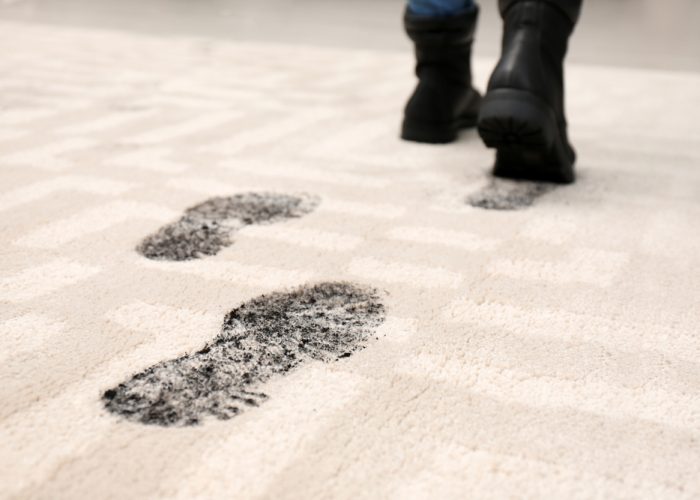
Construction sites are messy. Mud, paint spills, coffee drips, and wet boots are inevitable.
The Failure Point: Paper products are absorbent. When a painter spills a drop of latex, or a worker walks in with snow on their boots, paper doesn’t just get wet—it disintegrates. The moisture wicks through to the floor below, causing potential staining or warping (especially on new hardwood). Even worse, once wet, the paper tears under foot traffic, leaving the floor completely exposed.
The Polysols Solution: Polysols Vapor, lite and Premium lines feature a 100% waterproof top film. Spilled paint? Wipe it up. Muddy boots? Mop it off. The barrier remains intact, and your client’s floor stays dry.
Time is money. When you calculate the cost of floor protection, you must include the installation time.
The Failure Point: Rosin paper and cardboard have zero grip. To keep them safe, you have to tape every single seam and the entire perimeter.
The Polysols Solution: Our Premium Surface Protection features a pressure-sensitive adhesive backing. You kick the roll out, smooth it down, and it locks in place. No taping edges. No sliding. You save man-hours on install and removal.
Paper protects against dust. It does not protect against impact.
The Failure Point: If a trim carpenter drops a hammer or a heavy tool belt on rosin paper, it punches right through and dents the floor. That single dent can ruin a board in the middle of a room, requiring an expensive localized repair or a full sanding and refinishing job.
The Polysols Solution: Our protection features a non-woven fiber layer specifically engineered for impact absorption. It acts as a shock absorber, diffusing the energy of dropped tools and preventing dents in your finished surfaces.
Let’s look at the bottom line for a standard 1,000 sq. ft. job:
Stop throwing labor dollars at cheap products. Protect your profit and your reputation with professional surface protection.